STUDIO KIMMO
Films & Projects by
Mirka Duijn & Nina Spiering
Mirka Duijn & Nina Spiering
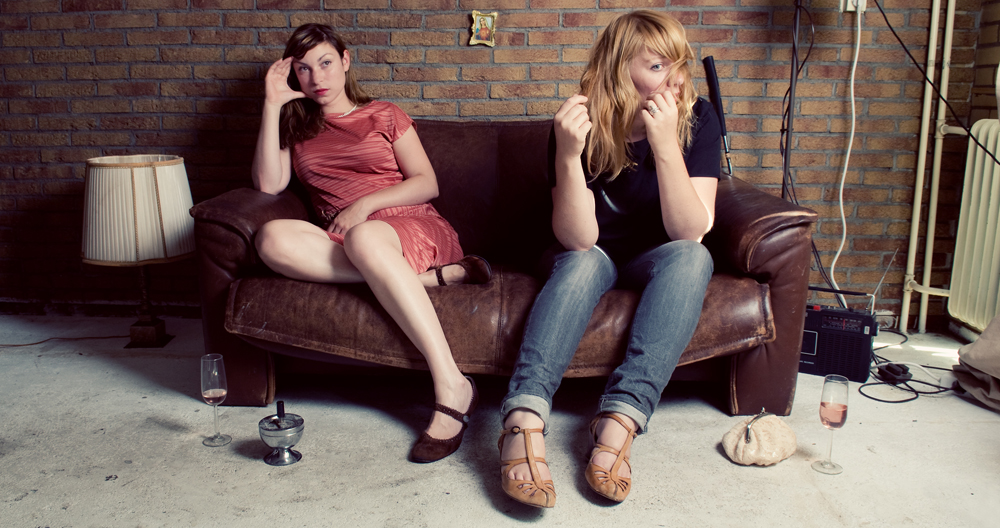
PHOTO BY PIM TOP
Studio Kimmo
Studio Kimmo, with its bases in Rotterdam, the Netherlands, and Gothenburg, Sweden, embodies the creative partnership of filmmakers Mirka Duijn and Nina Spiering.
Selected awards:
International Digital EMMY® Award, 2015
Peabody Award, 2019
Prix Europe, 2014
Mirka Duijn and Nina Spiering have a history of creating documentary, fiction, and experimental film projects, as well as journalistic productions such as The Industry and Last Hijack Interactive. Their projects always start with in-depth research, delving deeply into their chosen subjects. They have a particular interest in the mediation of place and identity.
The duo often works with archives and archival material, renegotiating historical narratives. Their feature documentary Shangri-La, Paradise Under Construction premiered at IDFA 2022 and competed for Best Dutch Film, while three more recent short films, made in the context of the research project Paradise Pt II (2024), were exhibited at Röda Sten Konsthall as part of a solo exhibition.
Studio Kimmo, with its bases in Rotterdam, the Netherlands, and Gothenburg, Sweden, embodies the creative partnership of filmmakers Mirka Duijn and Nina Spiering.
Selected awards:
International Digital EMMY® Award, 2015
Peabody Award, 2019
Prix Europe, 2014
Mirka Duijn and Nina Spiering have a history of creating documentary, fiction, and experimental film projects, as well as journalistic productions such as The Industry and Last Hijack Interactive. Their projects always start with in-depth research, delving deeply into their chosen subjects. They have a particular interest in the mediation of place and identity.
The duo often works with archives and archival material, renegotiating historical narratives. Their feature documentary Shangri-La, Paradise Under Construction premiered at IDFA 2022 and competed for Best Dutch Film, while three more recent short films, made in the context of the research project Paradise Pt II (2024), were exhibited at Röda Sten Konsthall as part of a solo exhibition.
The history of Studio Kimmo
Mirka began her career in 2003 at VPRO Digital, where she explored experimental interactive and transmedia storytelling across web and TV projects. By 2008, she shifted her focus entirely to writing and directing for film and media. Her earlier work often revolved around the evolving relationship between technology and storytelling, leading to interactive and immersive projects such as Last Hijack Interactive (Digital EMMY Award, 2014) and The Industry (Peabody Award, 2019).
Nina graduated from the University of the Arts in Utrecht in 2007 with a background in spatial design and video for theatre. She worked with leading Dutch theatre companies like Orkater and Oostpool before transitioning to film. Her early training in 3D space continues to shape her approach as both a director and production designer.
Their collaboration began in 2004, focusing on fiction and documentary filmmaking while also working in interactive documentary, expanded cinema, and immersive storytelling for film, television, and museum contexts. Their projects seek to challenge conventional narratives, experimenting with form and perspective to engage audiences in new ways of seeing and understanding the world.
Until recently Mirka Duijn was a Senior Lecturer in Film at HDK-Valand in Göteborg, where she taught in the MFA Film program. Nina Spiering is a lecturer in film at the University of the Arts in Utrecht.
The Stories we Tell
We, humans, tell stories to understand the world. Storytelling is a way of structuring a chaos consisting of events, feelings, memories into an understandable, agreeable whole, consciously or unconsciously incorporating certain impressions, while leaving out others. The question is: How does one get from a set of experiences to a narrative? How does one shape the process from the first encounter, through the organisation of one's impressions, to a final story that does justice to the experienced reality? This question is at the core of all of our projects, not only for ourselves as makers, but in general in society: What narratives do people create to cope with reality?
“When you are in the middle of a story it isn't a story at all, but only a confusion; a dark roaring, a blindness, a wreckage of shattered glass and splintered wood; like a house in a whirlwind, or else a boat crushed by the icebergs or swept over the rapids, and all aboard powerless to stop it. It's only afterwards that it becomes anything like a story at all. When you are telling it, to yourself or to someone else.”
― Margaret Atwood, Alias grace (1996)
Mirka began her career in 2003 at VPRO Digital, where she explored experimental interactive and transmedia storytelling across web and TV projects. By 2008, she shifted her focus entirely to writing and directing for film and media. Her earlier work often revolved around the evolving relationship between technology and storytelling, leading to interactive and immersive projects such as Last Hijack Interactive (Digital EMMY Award, 2014) and The Industry (Peabody Award, 2019).
Nina graduated from the University of the Arts in Utrecht in 2007 with a background in spatial design and video for theatre. She worked with leading Dutch theatre companies like Orkater and Oostpool before transitioning to film. Her early training in 3D space continues to shape her approach as both a director and production designer.
Their collaboration began in 2004, focusing on fiction and documentary filmmaking while also working in interactive documentary, expanded cinema, and immersive storytelling for film, television, and museum contexts. Their projects seek to challenge conventional narratives, experimenting with form and perspective to engage audiences in new ways of seeing and understanding the world.
Until recently Mirka Duijn was a Senior Lecturer in Film at HDK-Valand in Göteborg, where she taught in the MFA Film program. Nina Spiering is a lecturer in film at the University of the Arts in Utrecht.
The Stories we Tell
We, humans, tell stories to understand the world. Storytelling is a way of structuring a chaos consisting of events, feelings, memories into an understandable, agreeable whole, consciously or unconsciously incorporating certain impressions, while leaving out others. The question is: How does one get from a set of experiences to a narrative? How does one shape the process from the first encounter, through the organisation of one's impressions, to a final story that does justice to the experienced reality? This question is at the core of all of our projects, not only for ourselves as makers, but in general in society: What narratives do people create to cope with reality?
“When you are in the middle of a story it isn't a story at all, but only a confusion; a dark roaring, a blindness, a wreckage of shattered glass and splintered wood; like a house in a whirlwind, or else a boat crushed by the icebergs or swept over the rapids, and all aboard powerless to stop it. It's only afterwards that it becomes anything like a story at all. When you are telling it, to yourself or to someone else.”
― Margaret Atwood, Alias grace (1996)
Cargo Collective, Inc. Los Angeles, Calif.
Nature of Seeing
Exhibition (Start of project due 2027)
How have images shaped the ways we learn to see, understand and value plants and the natural world?
The Nature of Seeing is an exhibition at Floras Rike, the gallery of Gothenburg Botanical Garden. It brings eight historical school charts, borrowed from Göteborgs stadsmuseum, into dialogue with new works by two Sweden-based artists.

Once widely used to teach children about plants and the natural world, these illustrated charts have largely disappeared from classrooms. Revisiting them today offers an opportunity to examine not only the scientific knowledge they conveyed, but also the historical perspectives embedded in their images. What was made visible, classified and considered important? What was overlooked? And how do we relate to these ways of seeing today?
The charts were produced within particular scientific, cultural and historical contexts. Their illustrations reflect not only developments in natural history and education, but also broader traditions of collecting, categorising and representing the natural world, including those shaped by colonial histories. Looking at them today raises questions about how knowledge is communicated through images, whose knowledge is represented, and how ideas about nature change over time.
Combining contemporary art with education, the exhibition explores the relationship between plants, people and the ways botanical knowledge has been produced and passed on. Working across photography and installation work, the invited artists bring different artistic approaches into dialogue with the historical charts , opening up questions about ethnobotany, colonial histories and the visual conventions through which plants and their relationships with people have been represented.

The exhibition invites visitors to reflect on how images shape our understanding of the natural world, and how looking differently might change what we notice, know and value.
The exhibition will be developed in collaboration with Göteborgs stadsmuseum and Göteborgs botaniska trädgård.
Paradise Pt. II
Paradise Pt II: Reimagining Nature Through Documentary Landscapes
Nina Spiering, Mirka Duijn
Paradise Pt II is a research project with multiple outcomes, including film installations, short films, a feature documentary, and a pedagogical strand. A number of works developed within the project were presented in the solo exhibition Paradise Pt. II / The Death of Venus at Röda Sten Konsthall, Gothenburg (winter - spring 2026).
Paradise Pt II explores how hegemonic Eurocentric romantic and idyllic representations of nature have shaped the ways in which we, as image-makers, perceive and relate to our natural surroundings. This project investigates how such imagery, rooted in modernity and reinforced through visual culture, continues to influence our environmental consciousness by presenting nature as something separate from humanity, an object of beauty and a resource for consumption. As environmental challenges become increasingly pressing, re-examining these visual traditions takes on increased significance.
As documentary makers, we aim to critically engage with these visual traditions to challenge their inherited meanings and reframe them in ways that inspire alternative narratives. Through a series of concrete case studies, Paradise Pt II explores the genealogy of romantic clichés and their impact, with the goal of subverting their allure and fostering more responsible, reciprocal relationships with the natural world.
A key idea in this research is the garden - and the notion of paradise - as a contested space. It is shaped by exclusion and control, but it also holds space for utopian dreams and alternative ways of imagining the world. This way of thinking connects to Michel Foucault’s concept of heterotopia, which describes the garden as a place that mirrors, reshapes, and questions wider cultural and natural landscapes. Within this analogy, the documentary filmmaker becomes a gardener, curating and assembling imagery of nature to nurture new perspectives on natural environments.
Work that is part of Paradise Pt.II:
We Looked and Called it Nature - Five-screen video installation (22 minutes)
This work explores how ideas of beauty shape ways of looking at nature. Filmed in the botanical garden in Gothenburg over the summer of 2024, the work moves between the perspectives of gardeners, children, scientists, and the artists, as the makers attempt to shed a romantic lens on the landscape, and repeatedly encounter its persistence. Rather than rejecting beauty, the installation becomes an exploration of how beauty might be reconsidered and used differently once its innocence can no longer be assumed.
![]()
Photo taken at Röda Sten Konsthall by Andrej Lamut.
It’s alive, ALIVE! - 16-screen video installation
It’s alive, ALIVE! is a looped installation for which Nina Spiering brought together fragments of idealised nature drawn from recent visual culture. Inspired by Frankenstein, the work assembles a hybrid, slightly uncanny landscape from glossy decorative mirrors, advertising imagery, Instagram vistas, and the artists’ own footage. By blurring documentation and fabrication, the installation reflects on how images of “the natural” begin to live lives of their own - circulating, mutating, and shaping our relationship to nature beyond the control of their makers.
![]()
Photo taken at Röda Sten Konsthall by Andrej Lamut.
Paradise Pt II / How to Grow an Image - Short film (14 minutes)
How to Grow an Image is an archival essay film that traces how idealised images of nature have been historically produced and sustained. Working with archival material and contemporary footage filmed in Sweden over the summer of 2024, the film follows specific plant species through histories of cultivation, classification, and display, showing how images of ‘nature' are shaped by intertwined relations of care, control, and power. Developed as part of Paradise Pt II, the work tests how familiar visual tropes might be reworked to invite more critical and attentive ways of looking.
![]()
Still from How to Grow an Image
Rehearsal for Paradise - Feature documentary, expected development 2027 - 2028
Dir. Nina Spiering.
Rehearsal for Paradise is a documentary in development that explores how romantic images of nature - especially gardens - have shaped the way we see, desire, and treat the natural world. Moving between historical archives, contemporary gardens, and personal observations, the film reveals the garden as both a site of control and exclusion and a space for care, imagination, and future-making. By tracing how ideas of ‘paradise’ have been constructed and repeated over time, the film invites viewers to look again at the seductive images of nature that surround us, and to consider how we might cultivate different, more attentive relationships with our environment.
![]()
Still from Paradise Pt II, Mirka Duijn.
General interest
In the quest to make sense of their environment, humans rely on narratives, stories and myths that they tell themselves and others. But the narratives that are shaped around our relation to nature are heavily influenced by the natural colonial-gaze, a lens through which nature has often been perceived as a realm to be dominated and controlled.
Throughout history, narratives have shaped our perception of nature as an external, pristine entity, fostering an idealized escape from the complexities of human existence. However, this idealized portrayal has hindered our capacity to foster a holistic and sustainable rapport with the environment, resulting in a disconnect between our constructed stories and the complex realities they represent.
Despite the growing awareness of the need for a paradigm shift in our narrative approach to nature, we continue to struggle in reconciling the preconceived notions of the romanticized and enlightened views of nature. This tension between the constructed narrative and the authentic reality of our environmental challenges has led to a profound disconnect, perpetuating the colonial proposition that nature exists solely for our exploitation and benefit.
![]() Telephone poles disguised as trees in Utah.
Telephone poles disguised as trees in Utah.
In exploring the contemporary landscape and tracing the historical trajectory of humanity's portrayal of nature, it becomes evident that the roots of this dissonance can be found in the flawed narratives that have long dominated our understanding of the natural world.
Paradise Pt II project will exist out of a mosaic of case studies around this proposition. We are working with cases where there is a tension between the narrative that is created and the underlying represented reality. We will both focus on the present day, as well as tracing back history of the image of nature, asking ourselves the question: where and how did it go wrong, and with what consequences?
![]() The first sequoia tree that was transported to a world fair in England, after being ‘discovered’ in California by Western settlers. The bark was stripped off the original tree, transported and assembled at the fair. The tree was assembled so poorly, that visitors thought the it was a fake, a hoax, and for several years the discovery was not taken seriously at all.
The first sequoia tree that was transported to a world fair in England, after being ‘discovered’ in California by Western settlers. The bark was stripped off the original tree, transported and assembled at the fair. The tree was assembled so poorly, that visitors thought the it was a fake, a hoax, and for several years the discovery was not taken seriously at all.
Nina Spiering, Mirka Duijn
Paradise Pt II is a research project with multiple outcomes, including film installations, short films, a feature documentary, and a pedagogical strand. A number of works developed within the project were presented in the solo exhibition Paradise Pt. II / The Death of Venus at Röda Sten Konsthall, Gothenburg (winter - spring 2026).
Paradise Pt II explores how hegemonic Eurocentric romantic and idyllic representations of nature have shaped the ways in which we, as image-makers, perceive and relate to our natural surroundings. This project investigates how such imagery, rooted in modernity and reinforced through visual culture, continues to influence our environmental consciousness by presenting nature as something separate from humanity, an object of beauty and a resource for consumption. As environmental challenges become increasingly pressing, re-examining these visual traditions takes on increased significance.
As documentary makers, we aim to critically engage with these visual traditions to challenge their inherited meanings and reframe them in ways that inspire alternative narratives. Through a series of concrete case studies, Paradise Pt II explores the genealogy of romantic clichés and their impact, with the goal of subverting their allure and fostering more responsible, reciprocal relationships with the natural world.
A key idea in this research is the garden - and the notion of paradise - as a contested space. It is shaped by exclusion and control, but it also holds space for utopian dreams and alternative ways of imagining the world. This way of thinking connects to Michel Foucault’s concept of heterotopia, which describes the garden as a place that mirrors, reshapes, and questions wider cultural and natural landscapes. Within this analogy, the documentary filmmaker becomes a gardener, curating and assembling imagery of nature to nurture new perspectives on natural environments.
Work that is part of Paradise Pt.II:
We Looked and Called it Nature - Five-screen video installation (22 minutes)
This work explores how ideas of beauty shape ways of looking at nature. Filmed in the botanical garden in Gothenburg over the summer of 2024, the work moves between the perspectives of gardeners, children, scientists, and the artists, as the makers attempt to shed a romantic lens on the landscape, and repeatedly encounter its persistence. Rather than rejecting beauty, the installation becomes an exploration of how beauty might be reconsidered and used differently once its innocence can no longer be assumed.
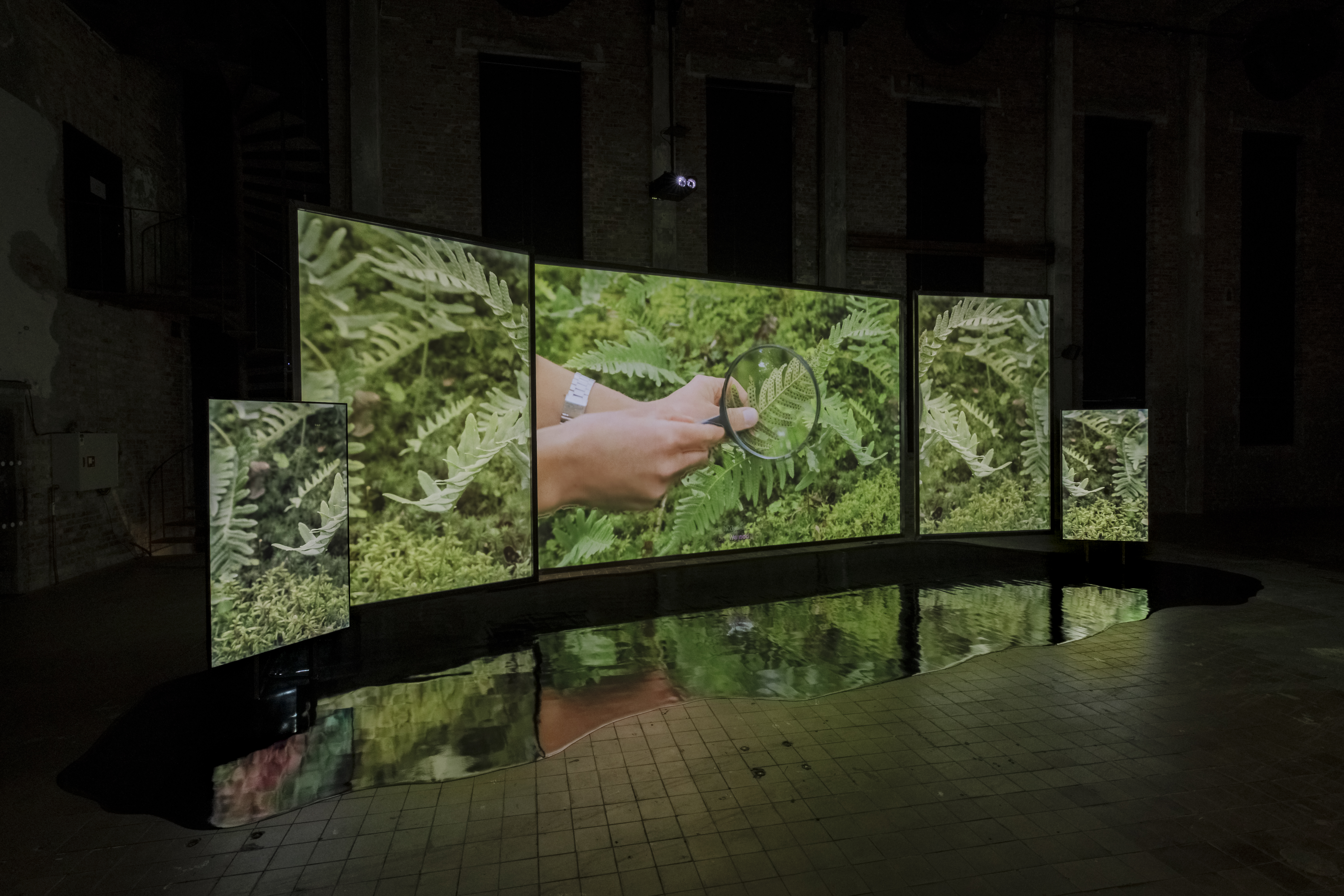
Photo taken at Röda Sten Konsthall by Andrej Lamut.
It’s alive, ALIVE! - 16-screen video installation
It’s alive, ALIVE! is a looped installation for which Nina Spiering brought together fragments of idealised nature drawn from recent visual culture. Inspired by Frankenstein, the work assembles a hybrid, slightly uncanny landscape from glossy decorative mirrors, advertising imagery, Instagram vistas, and the artists’ own footage. By blurring documentation and fabrication, the installation reflects on how images of “the natural” begin to live lives of their own - circulating, mutating, and shaping our relationship to nature beyond the control of their makers.
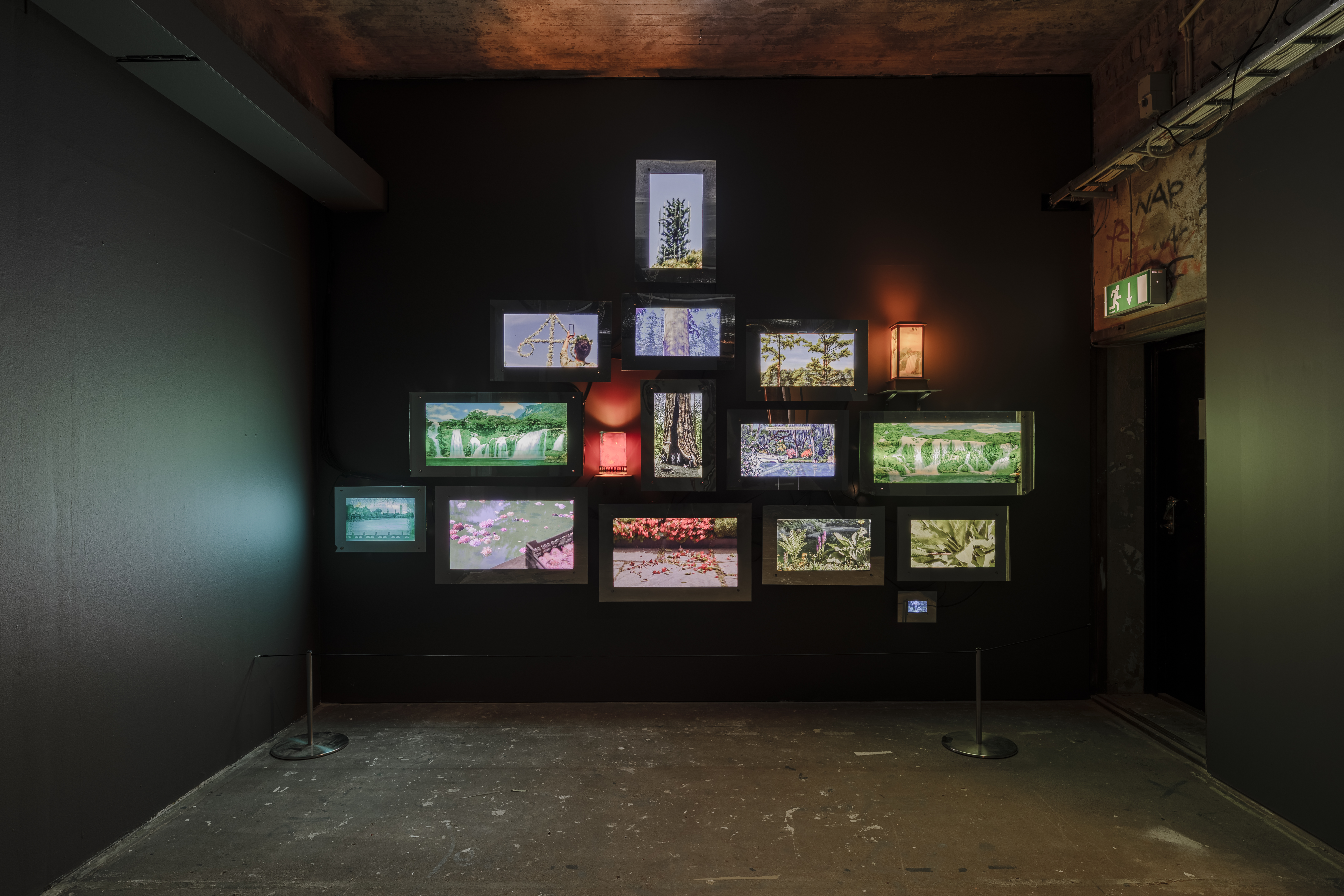
Photo taken at Röda Sten Konsthall by Andrej Lamut.
Paradise Pt II / How to Grow an Image - Short film (14 minutes)
How to Grow an Image is an archival essay film that traces how idealised images of nature have been historically produced and sustained. Working with archival material and contemporary footage filmed in Sweden over the summer of 2024, the film follows specific plant species through histories of cultivation, classification, and display, showing how images of ‘nature' are shaped by intertwined relations of care, control, and power. Developed as part of Paradise Pt II, the work tests how familiar visual tropes might be reworked to invite more critical and attentive ways of looking.

Still from How to Grow an Image
Rehearsal for Paradise - Feature documentary, expected development 2027 - 2028
Dir. Nina Spiering.
Rehearsal for Paradise is a documentary in development that explores how romantic images of nature - especially gardens - have shaped the way we see, desire, and treat the natural world. Moving between historical archives, contemporary gardens, and personal observations, the film reveals the garden as both a site of control and exclusion and a space for care, imagination, and future-making. By tracing how ideas of ‘paradise’ have been constructed and repeated over time, the film invites viewers to look again at the seductive images of nature that surround us, and to consider how we might cultivate different, more attentive relationships with our environment.
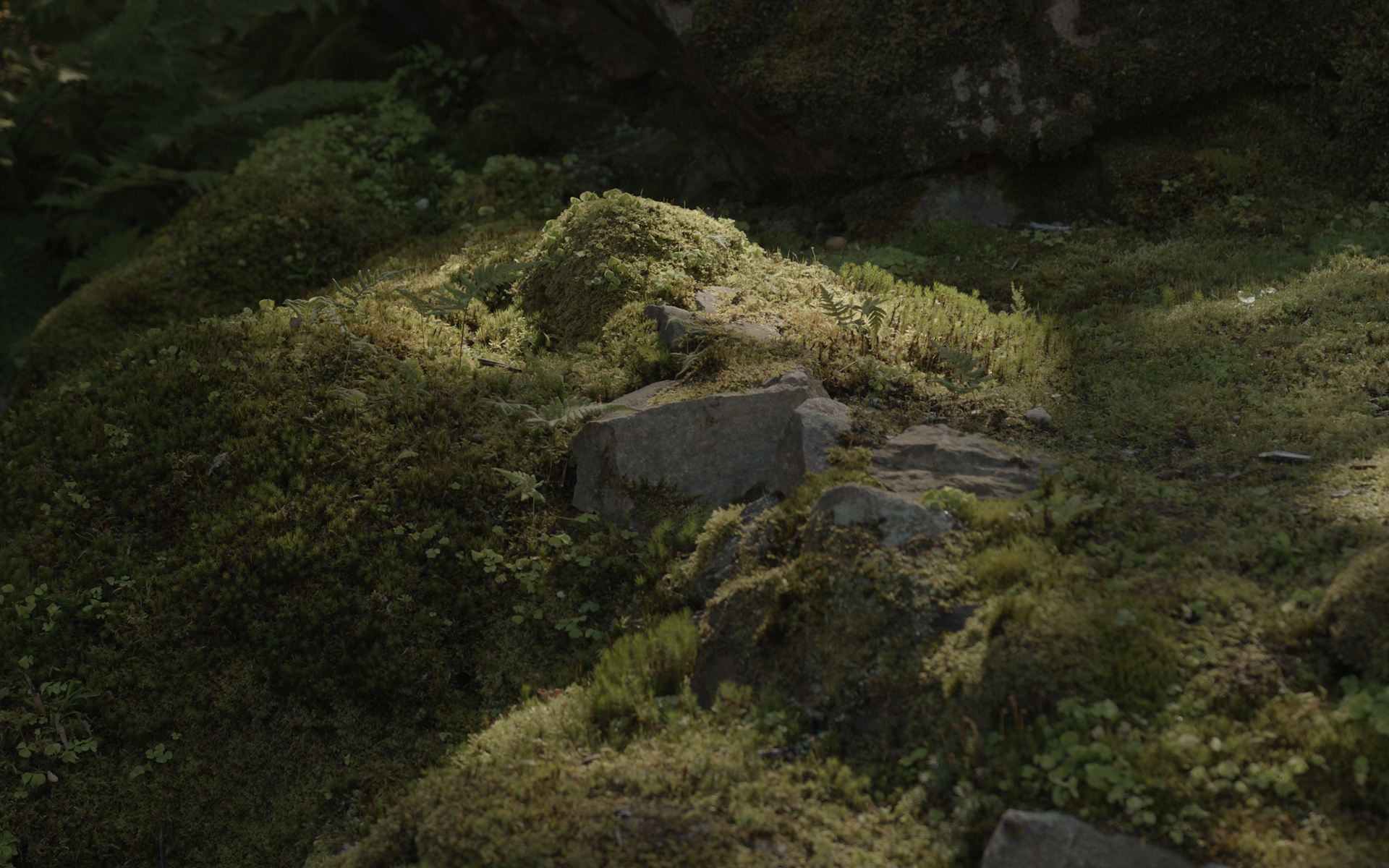
Still from Paradise Pt II, Mirka Duijn.
General interest
In the quest to make sense of their environment, humans rely on narratives, stories and myths that they tell themselves and others. But the narratives that are shaped around our relation to nature are heavily influenced by the natural colonial-gaze, a lens through which nature has often been perceived as a realm to be dominated and controlled.
Throughout history, narratives have shaped our perception of nature as an external, pristine entity, fostering an idealized escape from the complexities of human existence. However, this idealized portrayal has hindered our capacity to foster a holistic and sustainable rapport with the environment, resulting in a disconnect between our constructed stories and the complex realities they represent.
Despite the growing awareness of the need for a paradigm shift in our narrative approach to nature, we continue to struggle in reconciling the preconceived notions of the romanticized and enlightened views of nature. This tension between the constructed narrative and the authentic reality of our environmental challenges has led to a profound disconnect, perpetuating the colonial proposition that nature exists solely for our exploitation and benefit.
 Telephone poles disguised as trees in Utah.
 In exploring the contemporary landscape and tracing the historical trajectory of humanity's portrayal of nature, it becomes evident that the roots of this dissonance can be found in the flawed narratives that have long dominated our understanding of the natural world.
Paradise Pt II project will exist out of a mosaic of case studies around this proposition. We are working with cases where there is a tension between the narrative that is created and the underlying represented reality. We will both focus on the present day, as well as tracing back history of the image of nature, asking ourselves the question: where and how did it go wrong, and with what consequences?
 The first sequoia tree that was transported to a world fair in England, after being ‘discovered’ in California by Western settlers. The bark was stripped off the original tree, transported and assembled at the fair. The tree was assembled so poorly, that visitors thought the it was a fake, a hoax, and for several years the discovery was not taken seriously at all.